Message from the CEO

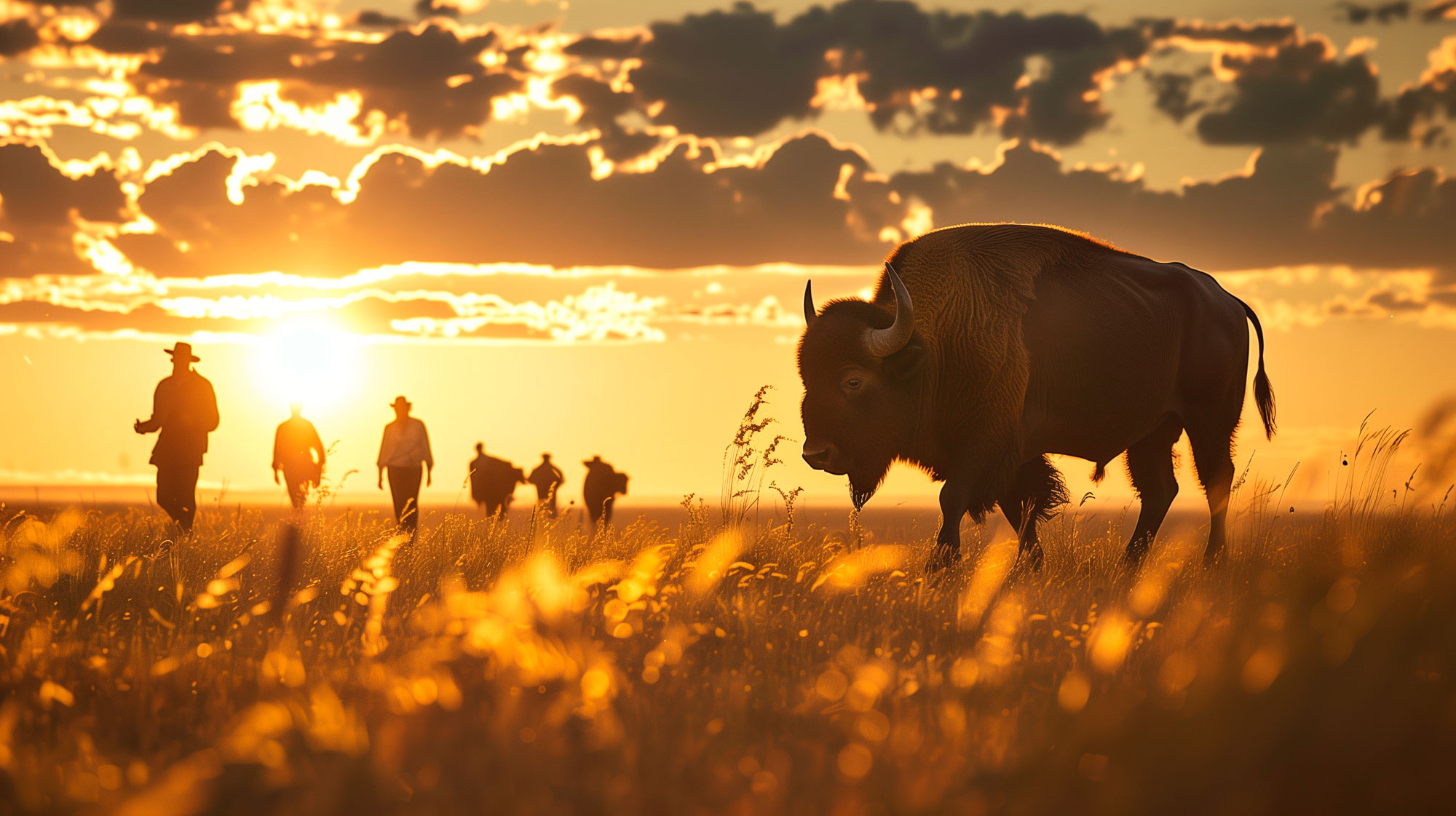
I am Bison. I am Buffalo. I am Tatanka, I am Iinnii, I am Pasqwawimostos, I am Iyanee’, I am Bizhikim, I am Mushkode Boyzhan, I am esevone, I am Xaniti, I am Qwisp, I am Hii3einoon… and I am the largest mammal on Turtle Island. I am your brother, your grandmother, your teachers, and a helper.

Since our near extinction and genocide in the late 1880’s, and after almost a century of staying in hiding in only a few places, mainly in the Zoo and National Parks, in the last two decades, by the thousands we have come back with the help of First Nations/Tribal, individuals and public leaderships. In 2016, we became the official mammal of the USA. Many more hooves are adding their vibrations in the heart of North America. A new transformation is happening.

I am now the CEO of the International Buffalo Relations Institute. The first organisation to allow me to be fully part of the decision making moving forward. They have restored my personhood as an integral member of the organisation. My chair is at the table. I am a living being sitting with my relatives guided by The Buffalo: A Treaty of Cooperation, Restoration and Renewal signed by over 50 Nations/Tribes and 1000’s of partners and individuals. We are building Nature Positive lifeways.


I am an integral part of the team, not an objective or a goal.

IBRI Tipi

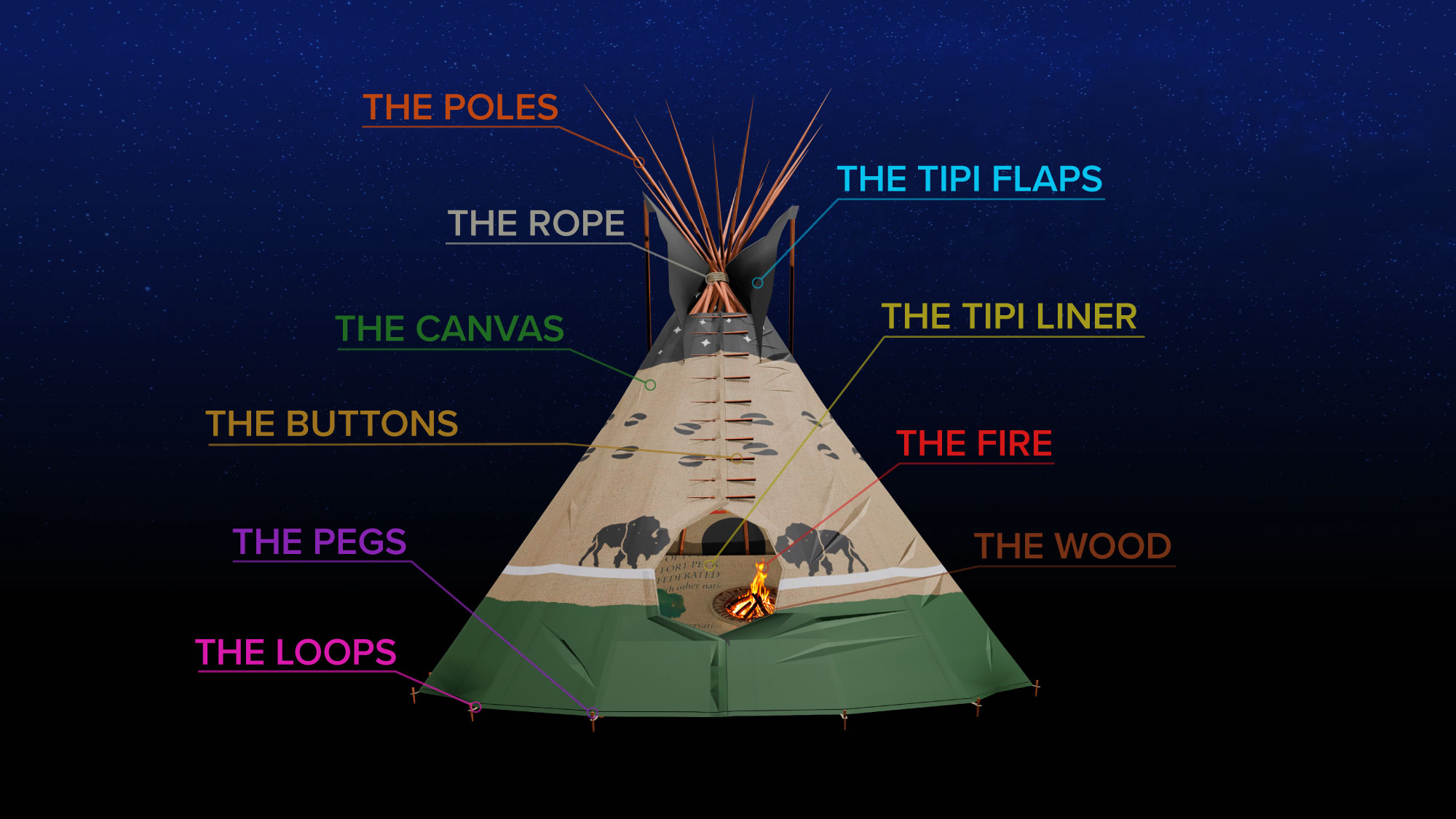
The land beneath it all. The plants, the soil, the animal kingdom, the water, the air - is what everything rests on. It is the reason the Treaty with the Buffalo exists. The reason we exist.

Most organizations are structured within a delegated authority model. Someone at the top, decisions flowing down. IBRI is built like a tipi, circular, relational, and accountable not to a hierarchy but as relationships to the buffalo, the land, and the communities and partners the Buffalo Treaty was created for. We shared responsibility.

The tipi is not a symbol but an actual model for how we operate. How decisions get made, who bears responsibility, and what we're ultimately accountable to. The tipi is an ancient technology of relationship. It stands because every pole shares the weight. It shelters because the canvas holds everyone inside it equally. It endures because the fire at its centre belongs to the whole circle, not to any one person.

Inside a tipi, there is no head of the table. There is a fire, and there is a circle, and everyone gathered around it has a place. The Buffalo is at the centre. Not a logo, not a symbol but the source. This is how IBRI chooses to work moving forward.
Learn about the epistemology of how an organisation can create transformational change. Be inspired for your strategic planning, from Post secondary institutions, to committees, NGOs and Foundations.

Bring your tipi to the camp. 

– Voice of Dr. Leroy Little Bear

This is how we breathe. They represent our knowledgeable relationships with the cosmos and the States/Provincial, National and International communities, implementing UNDRIP, supporting the mission of global conventions for Biodiversity and the Climate. It is reconciliation in action. We collectively have the ability to open or close pathways.
Inside, the tipi liners are The Buffalo: A Treaty of Cooperations, Renewal and Restoration. The liner holds all of us together by each Buffalo Nation's stories and activities related to Buffalo that are further supported by each pole. Nations, communities, knowledge keepers, and land stewards across the medicine line and across generations. Unity that ensures the fire remains ablaze and continues to burn.
The Buffalo is that fire. The spirit of the Buffalo is the source of our purpose and the measure of our work. The Buffalo reminds us to move forward from a place of good heart, spirit and intentions.
The wood is what keeps the fire alive. resources, funding, capacity. Gathered carefully. Added with intention.
Our shared responsibility. Nations, Elders, youth, communities, partners, supporters, and their programs, objectives and goals. Each one a structural beam, each one bearing weight. No single pole holds this up. We all do, together.
The songs, languages, energies, the wind and the voices and prayers. Buffalo Consciousness.
The International Buffalo Relations Institute. Humbly convening and participating in a flow between Buffalo culture and initiatives to increase our relations. The green painted line reminds us that our actions are part of a Nature Positive lifeways and represents a collective way of life.
The Buffalo connectors that make ripples on behalf of the Buffalo Treaty in each community. They maintain Buffalo culture and consciousness by knowledge sharing, advocacy, and relations.
The Treaty Articles, driven into the earth conservation, culture, health, education, research, partnership. They define the boundary of the work.
The community members actively living out those Articles, are the loops that connect the pegs to the canvas. Without them, the Treaty stays a document. With them, it becomes a living practice.
DOWNLOAD PRINTABLE IBRI TIPI
Buffalo is the CEO. All of us are their helpers.

The International Buffalo Relations Institute exists to share the vision and support the implementation of the Buffalo Treaty with signatories, partners and supporters. A Treaty based on the values of Cooperation, Renewal, Restoration.

Our role is to care for the space around that fire. We hold the heat, we steward the space, we create the conditions for that fire to burn. But we do not own it. We answer it.

Come sit on a blanket inside our tipi, visit and join our camp.

Buffalo Connectors

The Buffalo Connectors are the buttons that hold the canvas of our tipi together. Each person is an essential part and the strength comes from the many. Each Buffalo Connector is in relations with many more individuals. The Buffalo Connectors are people who intertwine the values and intent of the Buffalo Treaty with the knowledge sharing, advocacy, and relations in their family, work and community. We recognize the important work they do by spreading Buffalo Consciousness and implementing the Buffalo Treaty in their own unique way.

There are many more individuals that are Buffalo Connectors, if you want to nominate someone or yourself, please fill this form. Many names are missing, please help us to connect with our Buffalo Relations. We are stronger together.
Buffalo Connectors *list by first name alphabetical order:

Alvin First Rider

Kainai Nation, Treaty 7

Indigenous Fire Guardians, Grassland caretaker, Blood Tribe land manager

Anthony Blair Dreaver Johnston

Mistawasis Nêhiyawak, Treaty 6

Special Advisor to Mistawasis Nêhiyawak. Enable collaborations and partnerships based on Indigenous values with the land and history. Great-great-great grandson of Mistawasis aka Iron Buffalo.

Camina Manychief

Kainai Nation, Treaty 7

Heritage Management Specialist, Archeologist, Buffalo Guardian

Gina Star Blanket

Star Blanket Cree Nation, Treaty 4

Associate Professor of Indigenous Governance at University of Victoria, BC. Provide critical academic and theoretical analysis of the Buffalo Treaty. As a Cree/Saulteaux political scientist, I examine the treaty through the lens of Indigenous governance and relationality.

Helen Augare Carlson

Blackfeet Nation, Montana

Blackfeet Community College, Helper, caretaker, educator

Kansie Fox

Niisto anakok Apaitsitapiaki (Weasel woman), Kainai Nation, Treaty 7 and Dine (Navajo Nation)

Connect from an Nitsitapiisini perspective regarding Iinnii as part of us, a cultural keystone that has taught us a sustainable lifestyle for thousands of years and continues to guide ecological balance with niiksokowaiks (all our relations).

Melissa Arcand

Muskeg Lake Cree Nation, Treaty 6

Associate Professor, Department of Soil Science, University of Saskatchewan. Bringing Nations together to share knowledge on Buffalo caretaking and through studying how Buffalo interacts with soils.

Roxann Smith

Fort Peck Tribes, Montana

Fort Peck Community College, Educator, Community organiser, which along with Roxann, we recognise the following volunteers involved in the collaborative of the Pte Group as Buffalo Connectors:

• Robbie Magnan Buffalo Manager Fort Peck Tribes
• Riley McDonald (NFWF Project Manager Ft Peck Buffalo Ranch Program)
• Lewis Matthews (Law enforcement/Fish & Game Director)
• Les Bighorn (Ft. Peck Tribes Fish and Game warden)
• Lewis’ son Taylor Matthews
• Jonny Lee Bearcub Stiffarm
• Jonny’s son Josh Stiffarm
• Neil Gelinas (Jonny’s awesome helper!)
• Suzanne Turnbull
• Hillary Gourneau
• Lois Red Elk-Reed and her husband Dennis Reed
• Richard Peterson
• Destiny Eder and sons Westyn and Emrys
• Sam Azure
• Tanya Firemoon-McKenzie
• Mikel Sansaver
• Joanne Stewart-Kloker Fort Peck Community College Environmental Science/instructor
• Robert McAnally, Esq.—Retired FPCC Native American Studies
• Elizabeth Bird—Montana State University

Teresa Porter

1st generation born on Turtle Island, grew up near K’emk’emeláy (the place of many maple trees), family from Argentina

ē kanātahk askiy SAGE Project (Department of Soil Science, University of Saskatchewan), Connecting Buffalo caretakers, supporting soil sampling to show how Buffalo transform ecosystems when they return.

Teri Harper

Pte Yuhomni Wiya (Buffalo Whirling Woman) Nakoda give, Enrolled Cherokee member, Descendant of the Osage Nations

Working closely with Fort Belknap Buffalo Program, Education, Buffalo Caretaker

IBRI Team

The IBRI team participated in the creation of giant lantern puppet shows, films, tv shows, books, published articles, apps, multiple museum exhibits and large public gatherings of over 1500 First Nations and partners. Each time, it is a unique occasion to visit and dialogues on what it means to rematriate Buffalo, to inspire reconciliation, and explore a future with Buffalo. Our team, following our CEO leadership, is helping to right a historical wrong by bringing back the missing beats, the buffalo hooves, and teachings in the centre of Turtle island.

Buffalo

CEO

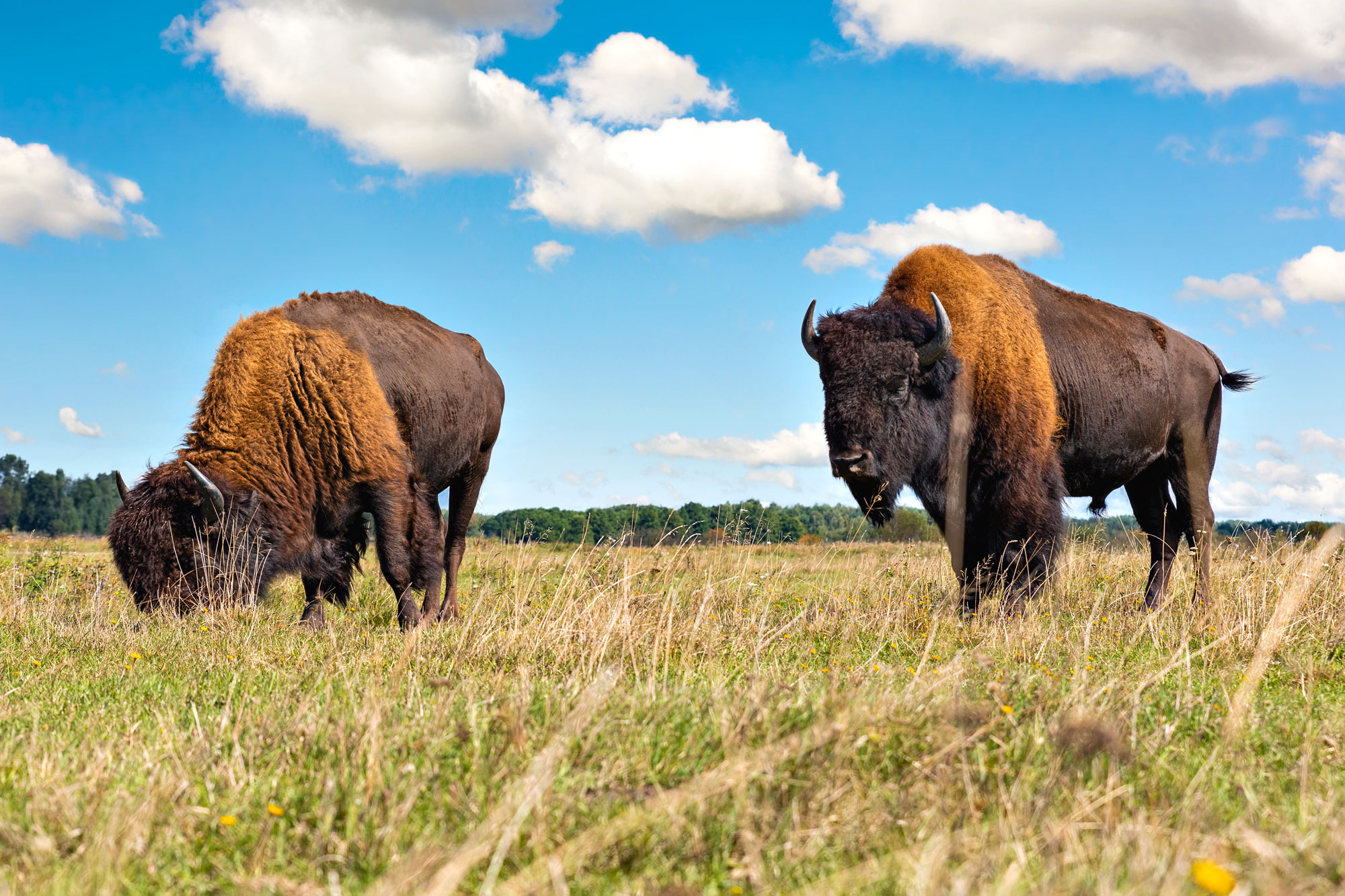
I am called by many names in multiple Indigenous languages. Many songs and symbols reflect my spirit. The International Buffalo Relations Institute is the first one to officially recognize my personhood. I am sometimes called in English bison bison athabascae (wood bison) or Bison bison bison (plain bison). We are cousins and all American bison. I have some relatives in Europe (Bison bonasus) and even way more distant relatives in Asia and Africa, such as the water buffalo. We are all from a 20 million years old family of Bovidae. While an ancient ancestor of the bison appeared in North America as early as 600,000 years ago, I really became the one you know in the present time around 10,000 years ago. 

I am a bio-cultural Keystone species. Similar to the stone found at the top of an arch, if you remove it, the rest of the system will collapse and surely, since my near extinction at the hand of the two legged, the North American Prairie ecosystems are the most endangered one. My long lived experience as an ecosystem engineer helps create a hopeful future to halt and reverse biodiversity loss and adapt and mitigate climate changes. I transform landscapes from Mexico to Alaska, I create habitat for all my relations. I help support water distribution with my wallows helping amphibians, insects and plants to thrive. I graze to eat and help spread life as I move around providing crucial nitrogen, phosphorus, calcium and magnesium stimulating growth and also deeply rooted grass and soil to capture more carbon. I transport life in seeds and distribute them around. I also nourish the diverse Nations of Buffalo People as well as wolves, grizzly bears and many others. I am also a deeply spiritual being connected to people, stars, soil, plants, animals and water.

Dr. Leroy Little Bear

President, Responsible for Transformational change with Buffalo

Leroy Little Bear was born and raised on the Blood Indian Reserve (Kainai First Nation), approximately 70 km west of Lethbridge, Alberta. He is one of the first Native students to complete a program of study at the University of Lethbridge in 1971. He continued his education at the College of Law, University of Utah, in Salt Lake City, completing a Juris Doctor Degree in 1975. He returned to his alma mater as a founding member of Canada's first Native American Studies Department. He remained at the University of Lethbridge as a researcher, faculty member and department chair until his official retirement in 1997. In 1998-1999, he served as Director of the Harvard University Native American Program. He is presently the Vice Provost for Indigenous Relations at the University of Lethbridge.

Dr. Leroy Little Bear is one of Canada's most distinguished Indigenous scholars, legal minds, and Indigenous Knowledge and Sciences advocates. Little Bear was awarded the prestigious National Aboriginal Achievement Award for Education, the highest honor bestowed by Canada's First Nations community in 2013. Little Bear is the recipient of honorary doctorates from the University of Lethbridge and the University of Northern British Columbia. Little Bear was inducted into the Alberta Order Excellence and the Order of Canada in 2016 and 2019 respectively. 

Little Bear had a role in the first draft of the UNDRIP and the inclusion Aboriginal and Treaty rights in the Constitution of Canada. Little Bear was also a major proponent in drafting of ‘Kainaisini’, a declaration by the Blood Tribe and the Declaration of the Blackfoot Confederacy. Along with his wife, Amethyst First Rider, Little Bear brought about the historic Buffalo Treaty between First Nations on both sides of the USA-Canada border in 2014. He is the board President and founding member of the International Buffalo Relations Institute. 

Dr. Little Bear brings a lifetime of experiences in paradigm shifting, native philosophy, meta-physics understanding from a Blackfoot perspective, the exploration of Blackfoot Knowledge through songs, stories, languages and landscape.
Amethyst First Rider

Responsible for creativity and guidance in the Buffalo Ways

Amethyst First Rider Iitspinnimaki is a member of the Kainai Nation, Blackfoot Confederacy, Alberta, Canada and married to Leroy Little Bear. She is a leader in the performing arts community for more that 20 years, producing and directing plays depicting Aboriginal stories and culture. Her experience in the arts has included dance productions, consulting for the University of California, Berkeley’s planetarium, as well as narration and production in the National Film Board’s documentary: Kainayssini Imanistaiswa, The People Go On.

She co-conceived Iniskim an immersive puppet lantern performance celebrating the reintegration of Bison into the natural ecosystem of Banff National Park. She is central to the development and success of The Buffalo: A Treaty of Cooperation, Renewal and Restoration signed by over 30 First Nations and Tribes in Canada and the USA. It is the biggest modern Treaty amongst First Nations. Its purpose is to “one again welcome the Buffalo to live among us” and it recognizes “Buffalo as a wild free-ranging animal and as an important part of the ecological ecosystem.”

She is also a co-founding member and advisor to the Kainai Ecosystem Protection Association. Amethyst is also Co-Chair of Niitsitapi Pod, Abundant Intelligence Program, a global Indigenous AI Research Program at the University of Lethbridge. Amethyst also serves Elder/Advisor for Blackfoot Language: Rematriation of Culture and Identity, an Indigenous-led Blackfoot language program at the University of Lethbridge.

Katira Crow Shoe

ED, Responsible for Post-Secondary Education

Katira Crow Shoe is a member of the Kainai Nation of the Blackfoot Confederacy and grew up on the Blood Reserve with her siblings and parents. Many of Katira’s childhood memories were on the land with her family, which established the deep connection and responsibility she feels to nature.

Katira joined the International Buffalo Relations Institute in 2023 and has been Buffalo’ing since. Katira enjoys being part of the Buffalo world and implementing the Buffalo Treaty.

In her free time, Katira loves watching Buffalo move on the land with her husband, David. She appreciates witnessing her children, nephews and nieces build relationships and connection with the earth, and she knows she is helping raise the next generation of advocates and supporters for Nature and Buffalo Consciousness.

Marie-Eve Marchand

Responsible for Conservation, Policy and Partnerships

Marie-Eve Marchand moved west in 2009 with a shared dream with the Eleanor Luxton Historical Foundation of returning Bison in Banff National Park by coordinating the Bison Belong initiative before their re-introduction by Parks Canada in 2017 and led week-long Indigenous women backcountry hikes to renew relationships. The Bison Belong joined energies with the Buffalo Treaty, where she attended the first signing in 2014 and supported successive meetings coordination. She was also the Associate Producer on Singing Back the Buffalo film and is a founding member of the International Buffalo Relations Institute and has helped the development of performance and exhibits. 

She has received the King Charles III medals for her contributions to reintroduce a keystone species in Banff National Park. Before leaving Quebec for the West, she received the National Golden Leaf Award for her work with CPAWS Quebec and Ottawa Valley to protect the last undammed river in Southern Quebec, the Dumoine River and actively participated in including the protection and conservation of at least 50% of Northern Quebec (north of the 49th).

Marie-Eve’s roots are in the blueberry region of Saguenay-Lac-St-Jean, Quebec and she feels privileged to call the mountains of Banff National Park home with her husband Harvey Locke.

Cody Spencer

Responsible for Buffalo Caretaker Program

Cody Spencer is a buffalo caretaker born and raised on Blackfoot Territory in Southern Alberta. He grew up on a farm near Áísínai'pi (Writing-On-Stone), where the prairie landscape and the Indigenous cultures rooted in it shaped who he became. He is of Northern Métis descent.

His path toward buffalo began with a book, Wes Olson's “Portraits of the Bison” which sparked a commitment he has honored ever since. In 2014, Cody founded Sweetgrass Bison, supplying grass-fed bison to his local community and building the hands-on knowledge that would carry him further. Today, he manages six distinct buffalo herds across 15,000 acres spanning Southern Alberta and Central Texas, and extends that expertise continent-wide through consulting work that supports herd managers and landowners across North America.

Cody brings that same depth of experience to the work of rematriation — walking alongside nations as they bring buffalo home to restore not just landscapes, both culture and the human spirit.

He lives with his wife and two sons in the Foothills of the Rockies near Pincher Creek, Alberta.

Kristian Obey-Derocher

Responsible for Marketing and Graphic Design

Kristian Obey-Derocher is Plains Cree from Flying Dust First Nation in Treaty 6 territory, in what is now known as Saskatchewan. He is currently based in Southern Alberta.

Joining IBRI opened a new world for Kristian. Working alongside communities and grassroots members, learning about their efforts to return bison to their homelands, sparked a deep appreciation for the remarkable work happening across Canada and the United States. He hopes his work in design and marketing helps those efforts reach the audiences they deserve.

Ninaakii Low Horn

Responsible for Communications and Media

Ninaakii (Head Chief Woman) Low Horn is a member of Siksika Nation of the Blackfoot Confederacy. Descendant of Eagle Rib, Low Horn and Duck Chief they were raised on Nation and proud to be a Kipitaipooka to their grandparents; Frank and Therese Stevens.

Ninaakii's background and education are in communications, public relations, marketing, and butchery. They also hold knowledge and great interest in Indigenous food sovereignty, native plants/water systems, ecology/environmentalism, etc.

They describe themselves as a creative, hands-on, a storyteller and adept communicator with analytic skills. In their free time, Ninaakii supports the arts, the Indigenous community, connection with their culture, among many other interests.

Stasi Many Bears

Responsible for Youth Education and Engagement

Stasi Many Bears is a member of the Blackfoot Confederacy from the Kainai Nation in southern Alberta. Belonging to the Tall Peoples clan, she maintains a strong connection to her community.

Stasi is deeply passionate about working with and advocating for the buffalo and Buffalo education. The buffalo is a keystone species central to her community's cultural well-being and vital to the ecology of the surrounding land. She actively contributes to the implementation of the Buffalo Treaty Curriculum and believes that meaningful learning about the Buffalo fosters greater respect, responsibility, and understanding among all people.

Stasi earned her Bachelor of Education from the University of Alberta, where she developed the knowledge and skills to support culturally grounded and land-based education. Through her work, she continues to connect with the land, honor Indigenous knowledge systems, and recognize the vital relationships that sustain life.

Juli Ohsada

Responsible for Curriculum Development

Juli Ohsada is a second-generation Japanese immigrant, born and raised on Treaty 7 territory in Châ Ûpchîchîyen Kudebi ("shooting little spruce tree" in Îyârhe Nakoda), in Canmore, Alberta. She is an educator and collaborator with experience supporting community-based initiatives through curriculum design, facilitation, and project coordination.

Juli’s approach to learning design is grounded in the understanding that education is relational, between people, land, and future generations. She holds a Bachelor of Education and a Bachelor of Science in Psychology, with a minor in Environmental Studies, from the University of Victoria. This interdisciplinary background informs her work with IBRI’s curricula, supporting efforts to restore Buffalo Consciousness in meaningful and sustainable ways. 

Outside of her professional work, Juli enjoys outdoor adventures and is an avid Ultimate Frisbee athlete.

Dr. Tasha Hubbard

Board VP, Responsible for Buffalo Storytelling

Dr. Tasha Hubbard (Cree) is a filmmaker and an associate professor in the Department of English and Film at the University of Alberta. She is from Peepeekisis Cree Nation in Treaty Four Territory and has ties to Thunderchild Cree Nation in Treaty Six Territory. Her feature documentary nîpawistamâsowin: We Will Stand Up opened Hot Docs in 2019, won Best Canadian feature, and won the Canadian Academy Screen Award for Best Feature Documentary. She was also recognized by the Director’s Guild of Canada with the Discovery Award in 2019. She is active in the rematriation of buffalo to the plains ecosystem in alignment with the Buffalo Treaty. Her feature documentary, Singing Back the Buffalo, was released in 2024, winning audience choice awards across the continent. Her most recent project is Meadowlarks, starring Michael Greyeyes, Carmen Moore, Alex Rice, and Michelle Thrush. It premiered at the Toronto International Film Festival as a Special Presentation in fall of 2025, and won the Panoramic Audience Choice award at the Vancouver International Film Festival. Tasha, along with co-creator Jason Ryle, is now developing an immersive project called Waves of Buffalo, supported by MIT Open Doc Lab/Worlding, the Indigenous Screen Office, and the Canada Media Fund.

Kyra Northwest

Board Treasurer, Responsible for Community involvement and Protocol

Kyra Northwest is from the Montana First Nation (Akamihk), which is one of the four Maskwacîs Cree Nations. She currently works for the Samson Cree Nation (Nipisihkopahk) as the Traditional Land Use Lead and she sits on the Samson Cree Nation's Nipiy Committee. Kyra's engagement with the Buffalo Treaty began through ceremony to re-introduce the buffalo to Banff National Park.

Kyra Northwest is from the Montana First Nation (Akamihk), which is one of the four Maskwacîs Cree Nations. She currently works for the Samson Cree Nation (Nipisihkopahk) as the Traditional Land Use Lead and she sits on the Samson Cree Nation's Nipiy Committee. Kyra's engagement with the Buffalo Treaty began through ceremony to re-introduce the buffalo to Banff National Park.

Dr. Sean Chandler

Board, Responsible for Arts, Language and Education

Dr. Sean Chandler is an artist, educator and enrolled member of the Aaniinen (Gros Ventre Nation). He is the President of Aaniiih Nakoda College (ANC) located on the Fort Belknap Indian Reservation in Montana. Since 2002, Sean has been employed with ANC, serving mostly as an Aaniiih Language Instructor and Director of American Indian Studies, until 2017 when he began to fill the role of Academic Dean and later as President in 2020.

His artwork is in the collections of the Minneapolis Institute of Art, Yellowstone Art Museum, Missoula Art Museum and the Eiteljorg Museum. Sean was selected as one of five artists for the 2023 Eiteljorg Contemporary Art Fellowship of the Eiteljorg Museum of Indianapolis, IN.

Dr. Chandler is a board member of the Montana Arts Council and the National Assembly of State Arts Agencies. Additionally, he serves as a commissioner on the Northwest Commission on Colleges and Universities. Sean also signed the Buffalo Treaty on behalf of ANC in 2023, as the first educational institution in the United States to be included as a supporter and partner.

Joely Big Eagle Kequaathoway

Board, Reponsible for Community Engagement and Buffalo Creativity

Joely BigEagle-Kequahtooway is an inter-disciplinary, place-based buffalo artist. She is a fashion and textile designer, visual artist, beader, storyteller and co-founder of the Buffalo People Arts Institute. She is Nakota/Cree/Saulteaux from the White Bear First Nations - signatory to Treaty 4. She has degrees in Civil Engineering from the University of Calgary and Mathematics from the First Nations University of Canada. She received her Master of Fine Arts degree in May 2024 from the Institute of American Indian Art in Santa Fe, New Mexico. She loves to incorporate mathematics and geometry in her artwork and is inspired by the perfect symmetry in nature. 

Her mantra envelopes everything Tatanga (Buffalo) as it connects her to ancestral memories, the land and is the manifestational glue that keeps her world together. She currently works as the TD Curatorial Fellow - Indigenous Relations with the MacKenzie Art Gallery and continues working in community implementing the mission of Buffalo People Arts Institute which is to bring back the buffalo mentally, physically, spiritually and emotionally - especially through traditional Indigenous arts.

Dr. Kyle Bobiwash

Board, Responsible for Pollinator and Insect Ecosystems

Photo credits and storytelling art imagery by Johane Janelle and Kristian Bogner |
 Web Design by Bogner Media
linkedin facebook pinterest youtube rss twitter instagram facebook-blank rss-blank linkedin-blank pinterest youtube twitter instagram