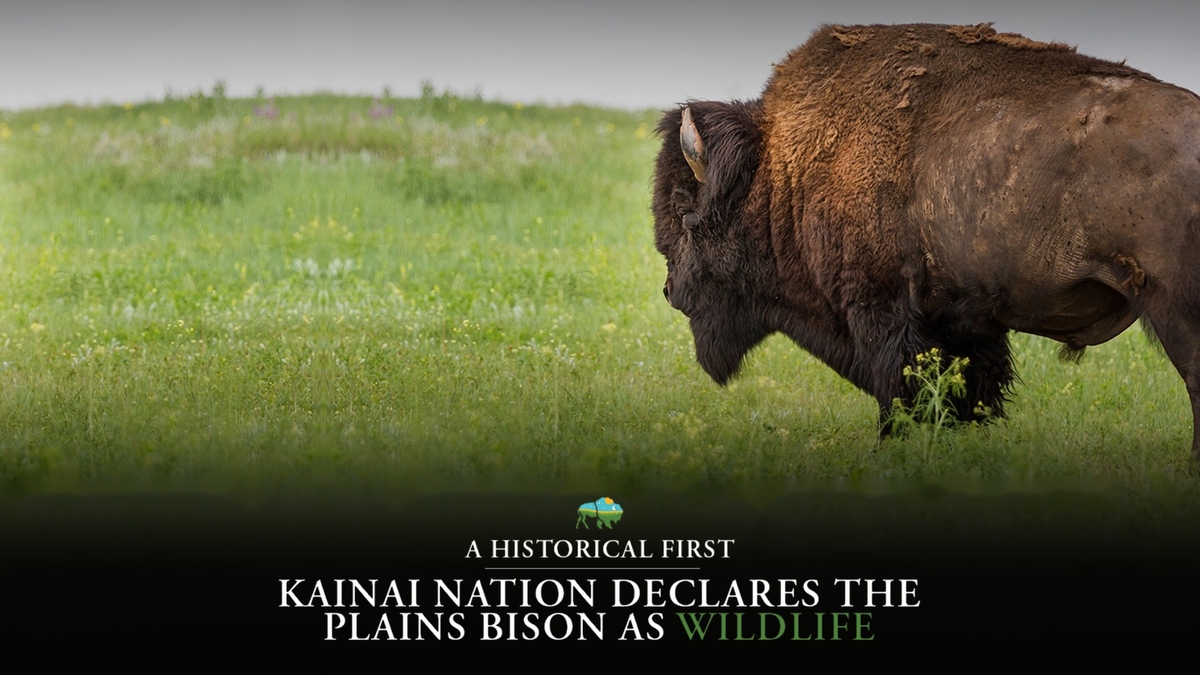
The Kainai Nation (Blood Tribe) in Southern Alberta has made history, becoming the first First Nation in Canada to officially declare plains bison (Iinnii) as wildlife.
The declaration marks a significant step in sovereignty and Indigenous-led conservation with the recognition of Buffalo as more than livestock. It affirms Kainai Nation’s inherent relationship with Iinnii and Kainai's authority to determine how Buffalo is recognized on its own lands.
For Niitsitapi (Blackfoot) people, this relationship has existed since time immemorial. Buffalo sustained the people, the land, and the cultural traditions passed down through generations. They remain deeply connected to Blackfoot identity, language, ceremony, wellness and ways of life.
A Relationship Beyond Classification
Before their near disappearance from the Great Plains in the late 1800s, Buffalo shaped the landscape and supported countless forms of life. This included the Indigenous Nations who lived in relationship with them.
The destruction of Buffalo populations devastated prairie ecosystems and disrupted the cultural, spiritual, and material foundations of many Indigenous communities. As Buffalo populations declined the animals that survived were confined behind fences and managed as agricultural livestock. Today, Alberta continues to classify Plains Bison as livestock under provincial legislation. Saskatchewan and British Columbia, by comparison, recognize Plains Bison as wildlife.
Kainai Nation has now taken a different approach.
Through its own authority and sovereignty, the Nation has formally recognized Buffalo as wildlife, affirming Iinnii’s place within the natural environment and the longstanding responsibilities of the Blackfoot people toward Iinnii. This decision is about more than changing a classification. It is about recognizing a relationship that existed long before provincial boundaries, agricultural regulations, or modern wildlife management systems.
Indigenous Nations Leading the Way
Kainai Nation's declaration joins a growing movement of Indigenous Nations exercising their sovereignty in Buffalo restoration and wildlife stewardship.
In 2025, the Eastern Shoshone and Northern Arapaho Tribes on the Wind River Reservation in Wyoming took significant steps to recognize Buffalo as wildlife under their respective Tribal authorities.
These decisions reflect a shared commitment to restoring the position of Buffalo within Indigenous territories and protecting their role in healthy ecosystems.
For Kainai Nation, the declaration builds upon years of work to bring Iinnii home, including the Kainai Iinnii Rematriation Project, which returned plains bison to the Nation's grasslands in 2021.
The work is rooted in cultural reconnection, ecological restoration, and the responsibilities carried by the Nation to care for Buffalo and the land.
Buffalo are an ecological keystone species whose presence helps shape and maintain healthy grassland ecosystems.
Their natural grazing patterns, movement, and interactions with the landscape support biodiversity, create habitats for other species, and contribute to the resilience of prairie ecosystems.
Kainai Nation's declaration also reflects its commitment to the global goal of becoming Nature Positive, supporting the restoration of healthy ecosystems and the reversal of biodiversity loss.
Recognizing Buffalo as wildlife reinforces the understanding that they belong within these natural systems, where they have played an essential role for thousands of years.
Kainai Nation is one of the eight original signatories of The Buffalo: A Treaty of Cooperation, Renewal and Restoration, established in 2014.
The Treaty brings Indigenous Nations together to recognize Buffalo as essential to the cultural, spiritual, and ecological well-being of Indigenous Peoples through shared commitments of cooperation, renewal and restoration,
Twelve years later, Kainai Nation's declaration represents another meaningful expression of these commitments and implementation of the Buffalo Treaty.
It demonstrates how Indigenous Nations are advancing the restoration of Buffalo through their own leadership, knowledge, and decision-making.